 Analyses of all verses
|
 Web Site
 |
 All
Sefirots All
Sefirots |
Nostradamus C6 Q55: 22ndC invasion by Arab nations begins at base of Alps.
Copyright: Allan Webber, December 2015
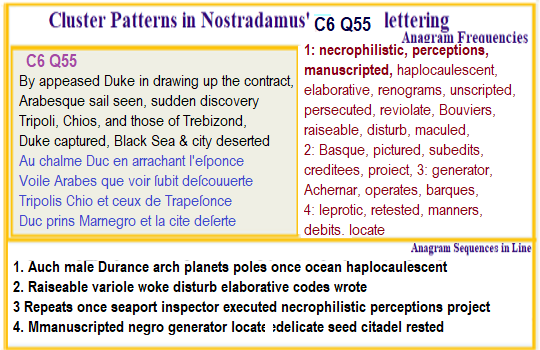 One of the important focal points of this verse are the anagrams
for
seaport (
Trapeſo)
and
ocean
(
once A)
and it is important to note that as with all other city names in these
verses we cannot make assumptions as to their location with
respect to rising seas.
One of the important focal points of this verse are the anagrams
for
seaport (
Trapeſo)
and
ocean
(
once A)
and it is important to note that as with all other city names in these
verses we cannot make assumptions as to their location with
respect to rising seas.
If the referent time is after, before or during the period the seas are rising it will may determine what its location is like at that time.
This is likely to be quite signifcant is the rises are as massive as Nostradamus' Prophecies and Prefaces imply.
One of the very strong themes in all of Nostradamus work is the impact of a great flood that covers seventy percent of France and leaves the major cities forgotten under great depths of water.
C9 Q69 Line 4: Lobster on the land not a third thereof will remain.
C1 Q69
The great mountain, seven stadia round,
after peace, war, famine, flooding.
It will spread far, drowning great countries,
even antiquities and their mighty foundations.
In my paper on Floods I set out the evidence in the prophecies that indicate the rise. As a result of the alyses Ipoint out that this implies an unprecedented raising of sea levels by 200 metres. This changes the landscape completely from what we currently know with many places on continents becoming islands, rivers are shorter and seaports exist where there are now only mountain-towns.
For example the Durance ( e Duc en ar) occurs as an anagram in this verse and under a scenario of massive sea rise this river would no longer be a tributary of the Rhone but a river emptying into a sea that reaches along the base of the Alps. This would make the region where Nostradamus began his life and died, part of the enlarged Mediterranean Sea.
Therefore if you see references of a ship from Arab lands that can sail far inland into France you have the means of understanding the verses twhere this occurs may tell the tale of a future invasion of France.
# haplocaulescent: botany term for plant having a simple axis with reproductive organs along that axis.